
Sustained by the Same Stuff
Where do your vegetables come from?
Thanks for reading my newsletter! All opinions expressed here are strictly my own. Find me on TikTok, Instagram and Bluesky. Ultracold publishes every Monday and my debut book Entangled States: A Life According to Quantum Physics is now available everywhere books are sold.
SUSTAINED BY THE SAME STUFF
There is a misconception about me in my neighborhood. People think I have lived here much longer than I have, and they think that because they often see me on Saturday mornings when they come to pick up their share of the local community-supported agriculture (CSA) program.
Ridgewood Farmshare, the CSA in question, runs purely on volunteers so after a few seasons of picking up my produce shyly, this past winter I finally signed up for several shifts of unloading and breaking down produce-filled boxes, counting egg cartoons and pallets of fruit, and putting checks next to members’ names on a spreadsheet as they collect their shares. It didn’t take long until I got pulled into the organizing side of things. As a former union organizer and teacher, and an undeniable Earth sign, I move with just enough organizing muscle memory to look like someone who could help. And I really did want to help. Ever since I have lived in Ridgewood, the CSA has been one of my most clear windows into how people, and the world, can be good.
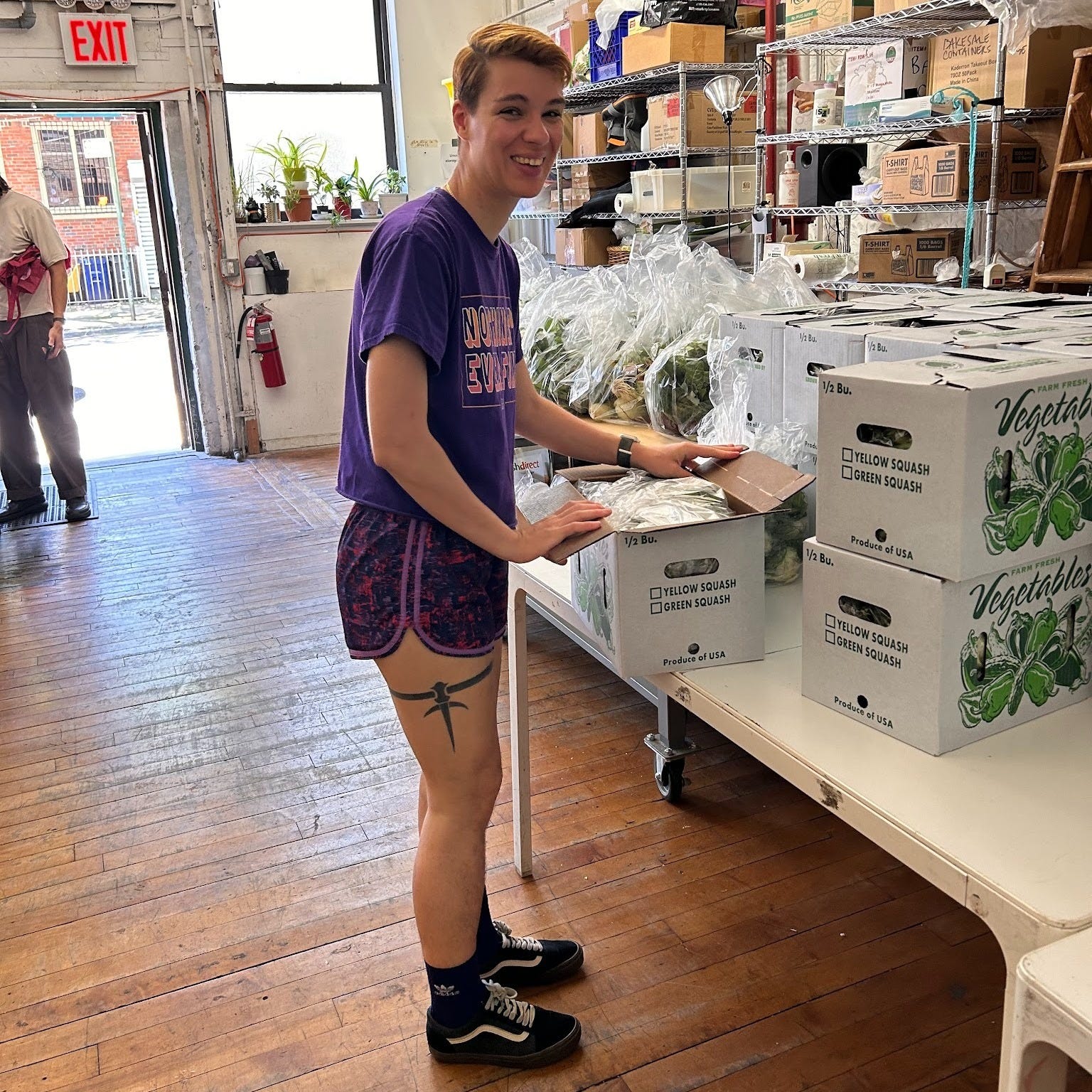
First, there are just the basic facts of supporting locally grown produce, in this case from Norwich Meadows farm in upstate New York, instead of putting dollars towards supermarket produce from faraway places. Though it is not the main source of carbon emissions in food production, transportation of those fruits and vegetables does contribute to the Earth’s climate crisis, especially when it comes to very perishable foods that are more likely to be transported by air. Participating in the CSA also means eating seasonally, like eating turnips and beets in the winter instead of buying tomatoes and zucchini at the grocery store year round. This can also be more sustainable because it requires less energy for heating and light. And it is more aligned with nature. It means letting the land set the schedule, to not designate ourselves as too important to respect the beats of our planetary home.
Eating locally and seasonally also feels immensely personal. I’ve often felt that eating like this has brought me closer to my grand-grandparents and the less corporate world that they lived in. On Croatia’s largest island, where the soil is hidden between rocks and seasoned with sea salt, they lived off of what they could get. In the summer, they fermented, salted and dried produce and the occasional bit of meat and fish for the colder days, without the option of a supermarket that erases seasons. As one example, I grew up eating a winter stew of fermented turnips and beans – repa i fazol – which has inspired so many cold weather meals since I signed up for the CSA. Being a Ridgewood Farmshare member nudged me into eating more seasonally and this both taught me more about my new home in New York and reconnected me to facets of my first home, in Croatia.
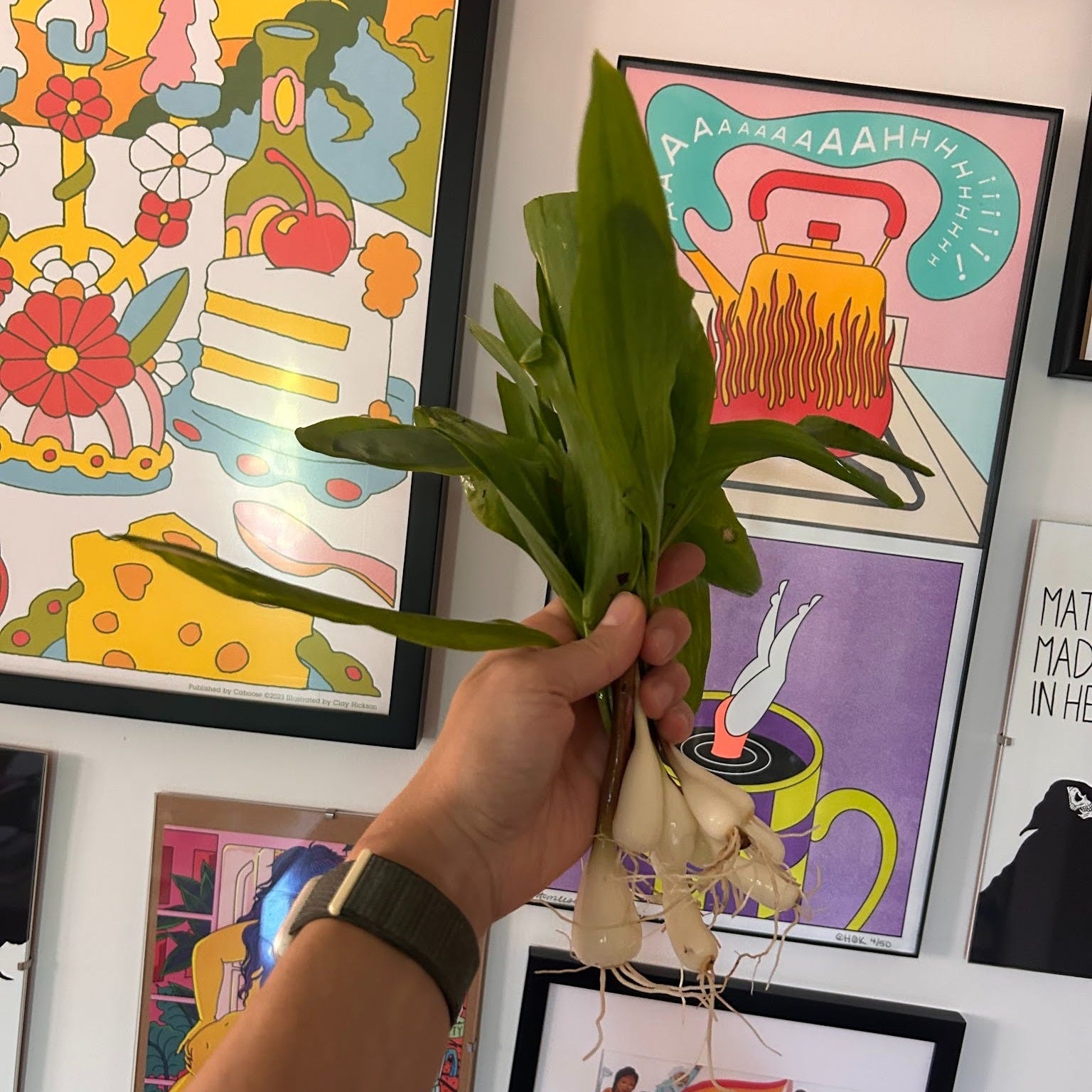
At the same time, the Farmshare introduced all sorts of new vegetables into my kitchen, from sunchokes to varieties of peppers that I had previously only seen on restaurant menus. Chatting with other members I learned that this is common – we had all learned new recipes, new techniques and come to love new flavours because of the CSA. Personally, this has made me a more confident cook. The weekly box of produce took away some of my grocery store decision fatigue while also challenging me to expand my palate.
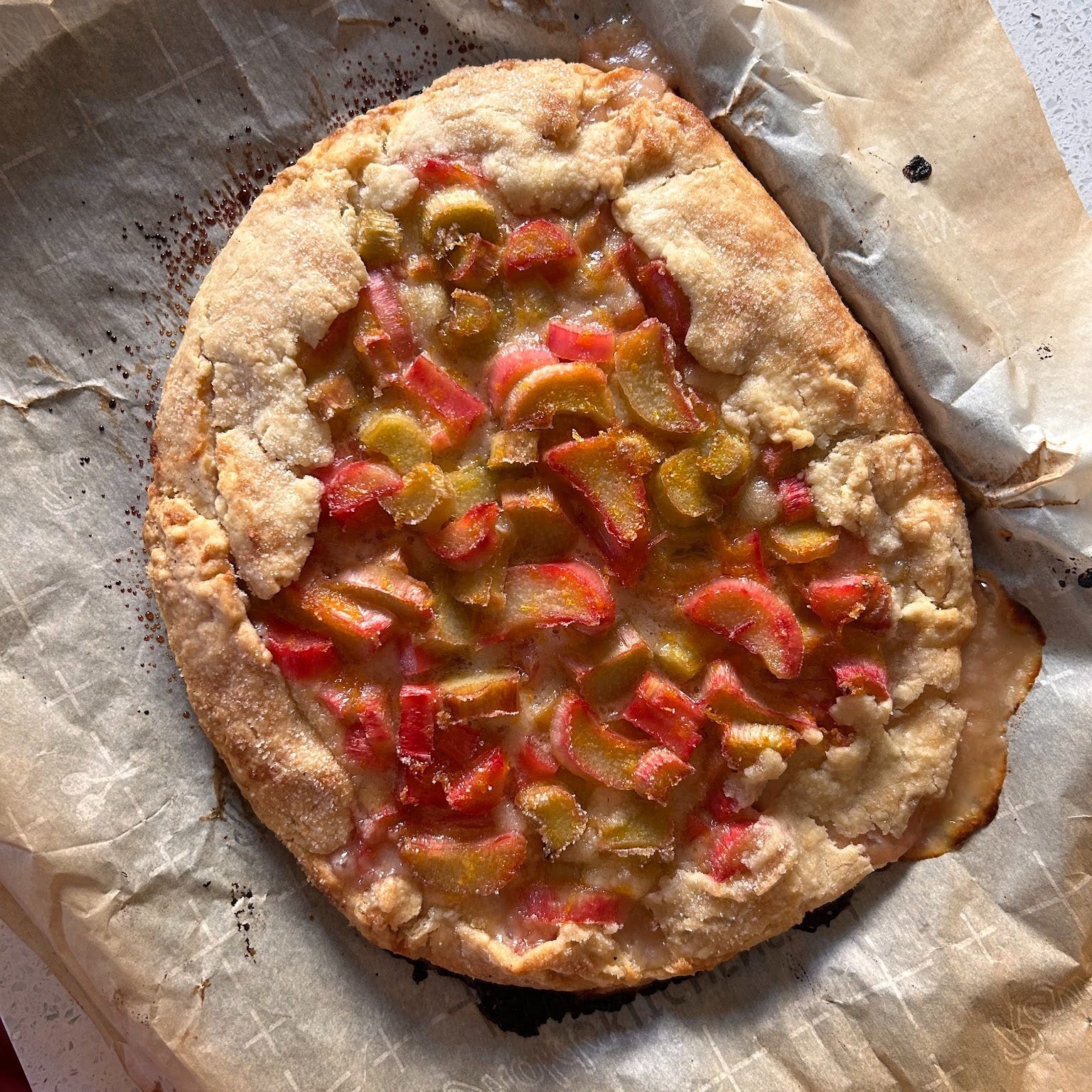
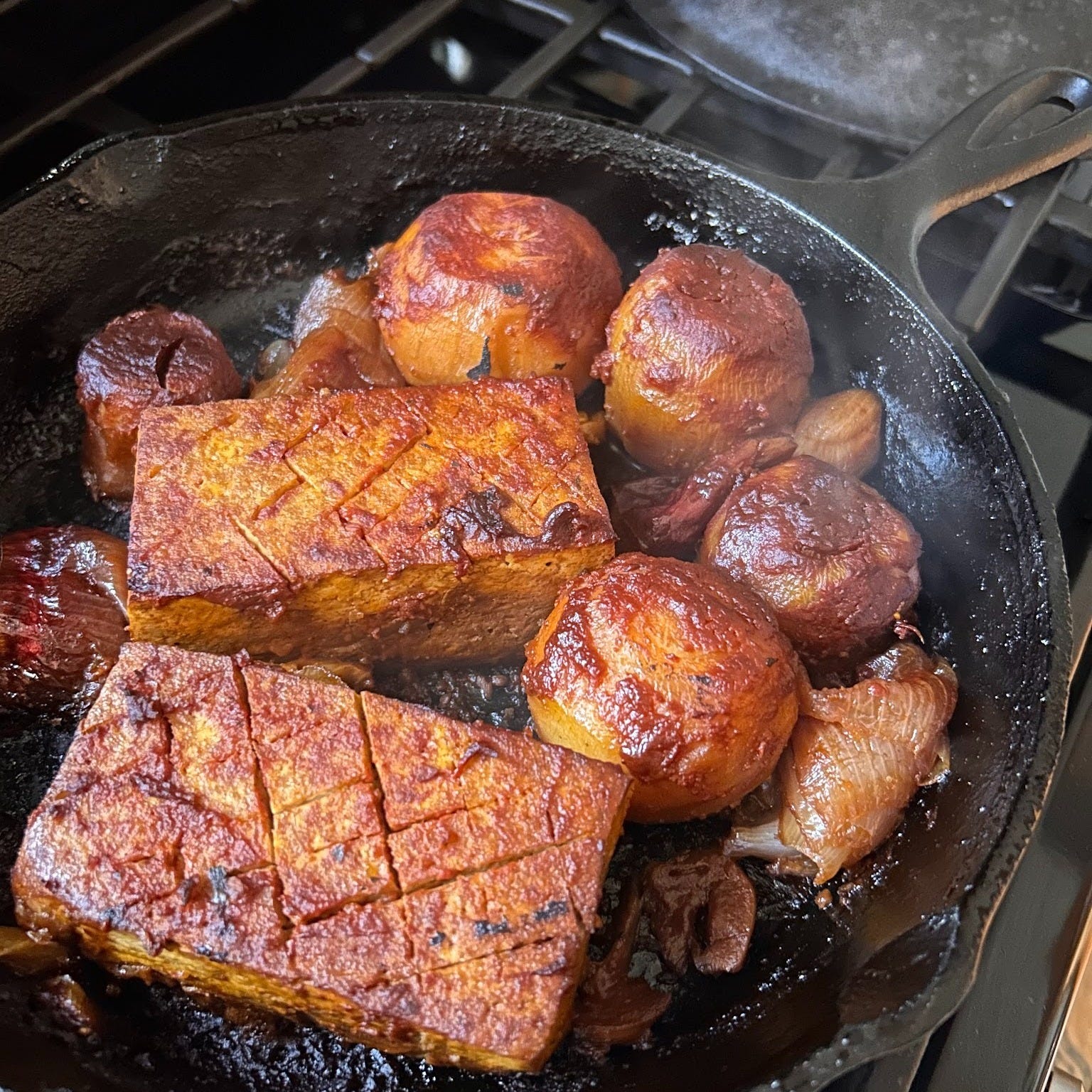
I shredded radishes into steamed cakes, baked rhubarb into galettes, shaved and marinated kholrabi for salads, shelled fresh fava beans (twice!) and massaged or sauteed myriad varieties of kale. My partner made a batch of hot sauce when we got tiny peppers we could only sort of identify and when we got mushrooms he dusted off an old savory tart recipe, suddenly inspired to deal with pastry. I am the primary cook in our household, but the CSA brought new cooking joy to both of us, as I think discovery and experimentation ought to.
In her gorgeously sharp memoir On Eating: The Making and Unmaking of My Appetites, Alicia Kennedy recounts how meeting local farmers at a market in her home borough of Long Island helped her understand how being connected to a place where you live by how you eat can help live like you give a shit. She also writes about the transformative potential of new flavors:
“Shifting palates toward finding pleasure in uniqueness and surprise and even, yes, a little weirdness means possibility.”
I’ve thought about every instance of opening a Farmshare box and thinking ‘what is this’ while grabbing a bulbous root or a leafy green as a new embrace of possibility, a move towards a good life that still might be possible. The double-sided coin of the CSA has proven favorable no matter how it falls: heads, you get to try something new; tails, you know the land is reliably giving what makes sense for it rather than something we were acculturated to find tasty for the sake of someone’s profit and power.
Throughout her book Kennedy discusses, worries about, and reflects on all the ways in which climate change may force us to change the way we cook and grow food. What happens when temperatures get too high for growing wheat in places where we currently grow it so we have to turn to baking with other grains, ones that we have not been taught are mainstream and delicious by our capitalist and colonialist grocery chain owners and agricultural legislators, she asks in one poignant chapter. I grew up on homemade bread and still make my own with wheat flour so I worry about this too, about being ready for it and about being grief stricken when it happens.
That worry shrinks a little when I make and enjoy a plate of something that would have been mysterious to me had I not gotten it through the CSA. I hope that eating locally and seasonally, in addition to not eating animal products,1 contributes to warding off a truly catastrophic future, even if just by a little bit. If it doesn’t, I can still hope that it’s preparing me to be more resilient in the kitchen, and to not lose my sense of it as a happy place once produce that is available to me changes.
For any of this to stand a fighting chance, the communal aspect of the CSA is crucial. Norwich Meadows is co-owned by two people whose names and stories you can easily find online rather than a faceless corporation. One of them is a grandson of Palestinian farmers, the other his partner. In contrast, here are the top five grocery chains in the United States, by revenue, according to Progressive Grocer’s annual ranking: Walmart U.S., Amazon, Costco, Kroger, and CVS Health. The difference could not be more stark.
A few days ago, I got a text from our liaison at the farm, describing where our cherries for the week were coming from. I tried one and they are really good, he said. I trusted his judgement like I would a friend’s. It feels impossible to trust a supermarket like that. I would never trust a billionaire like those that own the aforementioned chains about absolutely anything, let alone something so life-giving and intimately human as eating.
When the cherries came the following Saturday, on a van driven by a man who has wished me blessings every time I have unloaded vegetables from his vehicle, the volunteers who carried them off the truck ooh-ed and aah-ed over their deep colour. The cherries were beckoning them in a most seductive, plump burgundy. It was a daisy chain of cherry love, with many members unable to resist tasting a fruit or two before taking the whole box home. “I was hoping there’d be cherries this year,” one person told me as I was looking for their name on the spreadsheet. “I hear there will be a lot of berries and melons this year,” I said, feeling like this was the most important insider knowledge I have ever had access to – and it absolutely had to be shared.
Ridgewood Farmshare is anchored to Ridgewood Commons, a community space that hosts everything from twice a week food pantry to movie nights, tutoring to free communal Sunday dinners, a tiny gym to workshops on fixing your bike, hacking your devices and organizing for tenants rights, and much more. In other words, someone is always there, and it doesn’t take long for faces to become familiar. Once the CSA pick-up starts, the faces multiply.
Some Farmshare members are regulars in the space and know and love it. Some are only familiar with it through vegetables exchanging hands but become curious and get involved in more. Very often someone will see the commotion from the street and come in to ask what the space is and whether they may be welcome there. Over the past few months of co-organizing the Farmshare I got better at fielding questions and, more importantly, putting names to faces and learning more about people from my neighborhood. I learned the names of many dogs, absorbed an awful lot of gossip about neighborhood businesses, and CSA and Ridgewood Commons members alike offered me advice on all manner of things, such as where to buy matcha in bulk or how to not pass out when you’re giving blood.
I keep thinking about an essay that Devin Kate Pope wrote last year about pickups at her CSA where she contrasted the chatter that permeates it with the dominance of the self-checkout aisle at most contemporary chain supermarkets. “No one talks there unless the machine gets angry and they turn, exasperated, looking for help. Speed and cheapness are the gods and chatting has fallen from grace,” she wrote of those aisles and stores before illustrating how much the CSA is the opposite. Pope and I live on opposite sides of the country, in rather different climates, in rather different families.2 The fact that our experience of the sheer warmth of farmshare small talk and small acts of care that accompany it, and how much of a difference that makes, could be so similar speaks to the life-giving power of the community part of community-supported agriculture.
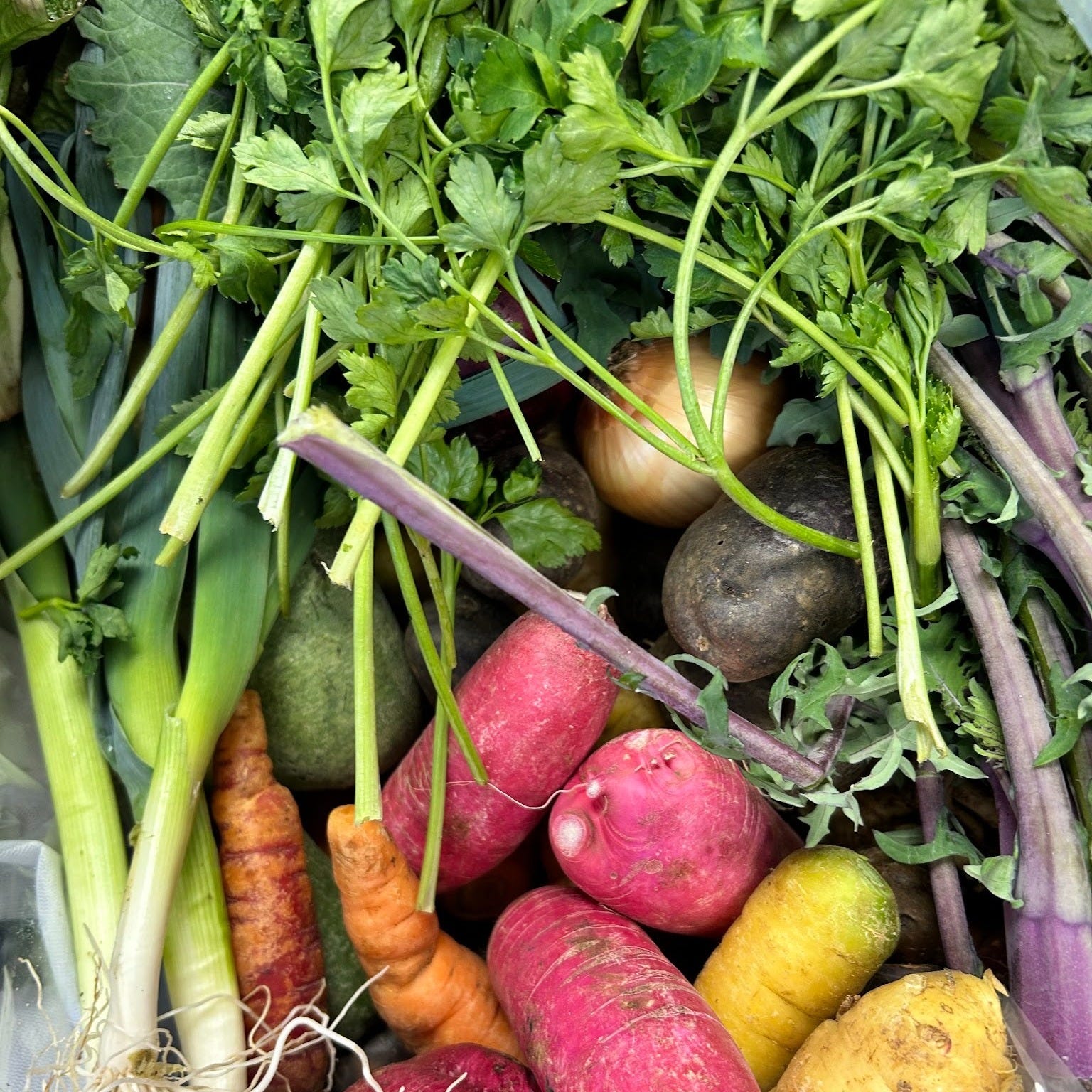
It’s safe to say that my shy days at the CSA, and in the neighborhood, are quickly coming to a close. I am grateful for it. It feels so magical to know that me and all of these cool, friendly people carry some of the same nutrients in our muscles and our bones because what brought us together is exactly what gives us life – food. We are a community in the sense that we are physically being sustained by the same stuff, and that we keep seeing each other on the weekends.
This is all very basic, but in a world obsessed with optimised nutrition bars, drinks and supplements, grocery delivery devoid of human contact, and reducing food to being either a vessel for maligned calories or an industrial product, it is a notable start. Opening a box of vegetables once a week is not a guarantee of some future salvation, but building habits, awareness and connections will certainly be important for how we make it through whatever lies ahead of us.
Best,
Karmela
Studies reliably show that what you eat has more impact on the climate than where what you eat comes from. Eating locally and seasonally makes a much smaller dent in your carbon footprint, for instance, than reducing the consumption of meat and dairy.
Notably, I am cooking for two crunchy adults and exactly zero children - a much easier task!
What you wrote is a balm to all of the corporate processed food I wrote about this week. Thank god!